Six weeks to a
release ready
track
Live online with VERSAH, BRIGSY & inmotion. You'll learn all the key Jump UP prod techniques across six sessions and finish with a mastered track that's ready to send out.
Claim a spot
Ten producers per cohort. Apply and we'll come back with the payment options & get you set up.
The payment options & more info will be coming soon. If nothing lands in 24 hours, email us and we'll chase it.
Jump up lives or dies on the detail
Jump Up is technical & the skills you need often aren't available to the public. That's why so much bedroom jump up sounds thin, and why another preset pack won't shift it.
Your drums don't hit
Layering 6 snares only works if you know HOW to layer. Sample selection is key. Post processing is the last thing you should be reaching for.
Your bass has no identity
Following tutorials is great, but what you can't do yet is look at a sound you love and say why it sounds that way. Which is the thing that lets you intentionally create your own sounds & sonic identity.
A finished record, not another folder of loops
Hard hitting, punchy drums
Sample choice and placement that give a groove real weight, plus the percussion that fills the gaps your kick and snare leave behind.
Bass with identity
Build a sub, a stab, a womp and a Reese from scratch in Serum, and know why each one behaves the way it does.
A mix that translates
Competitive loudness & clarity that still punches on a club rig.
Something worth sending
One finished track, plus guidance on which labels suit your strain and how to write an effective demo email.
Six weeks of sessions
Week 1's drum loop becomes Week 2's groove, then Week 3 and 4's sound design, then Week 5's arrangement, then Week 6's master. Nobody starts from a blank project in Week 5.
WK 01
Drums: the engine of jump up
The four strains, patterns, sample selection, percussion
Drums: the engine of jump up
The four strains, patterns, sample selection, percussion
What we cover
- Modern, old school, Belgian and dark, with reference listening for each
- How a pattern changes the perceived weight and speed of a track without touching the BPM
- Placement, groove and swing, and why quantised to death reads as amateur
- Choosing and processing drum samples for the strain you're writing in
- Using percussion to fill the gaps your kick and snare leave behind
You'll leave with: a drum loop that carries the weight your track needs, and an ear that tells the four strains apart in seconds.
WK 02
Composition and call and response
Bass roles, stabs, womps, sustains, Reeses, sampling
Composition and call and response
Bass roles, stabs, womps, sustains, Reeses, sampling
What we cover
- Call and response, the structural idea the whole genre runs on
- What makes a good sustain, stab and womp, and where a Reese actually belongs in jump up
- Giving every bass a job and a frequency band so they stop fighting each other
- Using vocals, amens and percussion as hooks and transitions
You'll leave with: a drop that works as a conversation, with every bass doing a job instead of crowding the same space.
WK 03
Sound design pt 1: subs and oscillators
Preset teardowns, sub design, wavetables, oscillator mod
Sound design pt 1: subs and oscillators
Preset teardowns, sub design, wavetables, oscillator mod
What we cover
- Pulling presets apart across all four strains, asking why does this sound the way it does
- Following subs against sustained subs, harmonics, and why a pure sine disappears on a phone
- Wavetables as stacks of harmonics, so you pick one on purpose instead of scrolling
- Bend, PWM, sync and PD, and which modulation gets you which character
- Octave and semitone tricks that make a flat sound feel unstable and alive
You'll leave with: your own sub sitting in your own drop, and the ability to explain any sound you hear.
WK 04
Sound design pt 2: movement, FX and layering
LFOs, filters, Serum FX, processing order, layering
Sound design pt 2: movement, FX and layering
LFOs, filters, Serum FX, processing order, layering
What we cover
- LFO shapes, and tying modulation to your drum groove instead of fighting it
- Every filter type, including combs, diffusers and reverb, where a lot of the interesting texture lives
- Distortion is wave shaping, not volume. Demonstrated level matched so you hear what actually changed
- Processing order: distortion into filter against filter into distortion, both ways
- Band splitting, Disperser, OTT, saturation and transient shaping, plus clipping against limiting
- Layering with intent: sub for weight, body for character, top for bite
You'll leave with: a layered bass that holds up on a big system, which the rest of the track gets built around.
WK 05
Track building and arrangement
Structure, atmosphere, energy, transitions, builds
Track building and arrangement
Structure, atmosphere, energy, transitions, builds
What we cover
- A working arrangement template with bar counts: DJ intro, drop, breakdown, second drop, outro
- Why the first drop is the one that gets auditioned, so you don't save your best idea
- Building tension. A drop is only as big as the space in front of it
- Decreasing energy, which is the skill nobody practises
- Seeding a familiar element into the build so the drop lands as a payoff
- Getting five minutes out of three ideas through sound manipulation
You'll leave with: a full track from intro to outro that takes the listener somewhere.
WK 06
Mixing and mastering
Low end, mono, loudness, metering, playback night
Mixing and mastering
Low end, mono, loudness, metering, playback night
What we cover
- Mixing jump up as a two element genre. Drums and bass first, everything else supports
- Surgical sidechain and glue compression, plus how jump up differs from liquid and neuro
- Kick and bass: phase, ducking, and the five second fix for a low end that's been weak for a week
- Mono low end and stereo width, and why club systems change the rules
- Metering with SPAN, YouLean and VISION so you stop mixing with your eyes closed
- Clipping into a limiter to get loud without losing the punch that made it loud
- Playback testing on a phone, in a car, on headphones and on a club rig
You'll leave with: a competitively loud master that translates from a phone speaker to a club rig.
Taught by someone still releasing
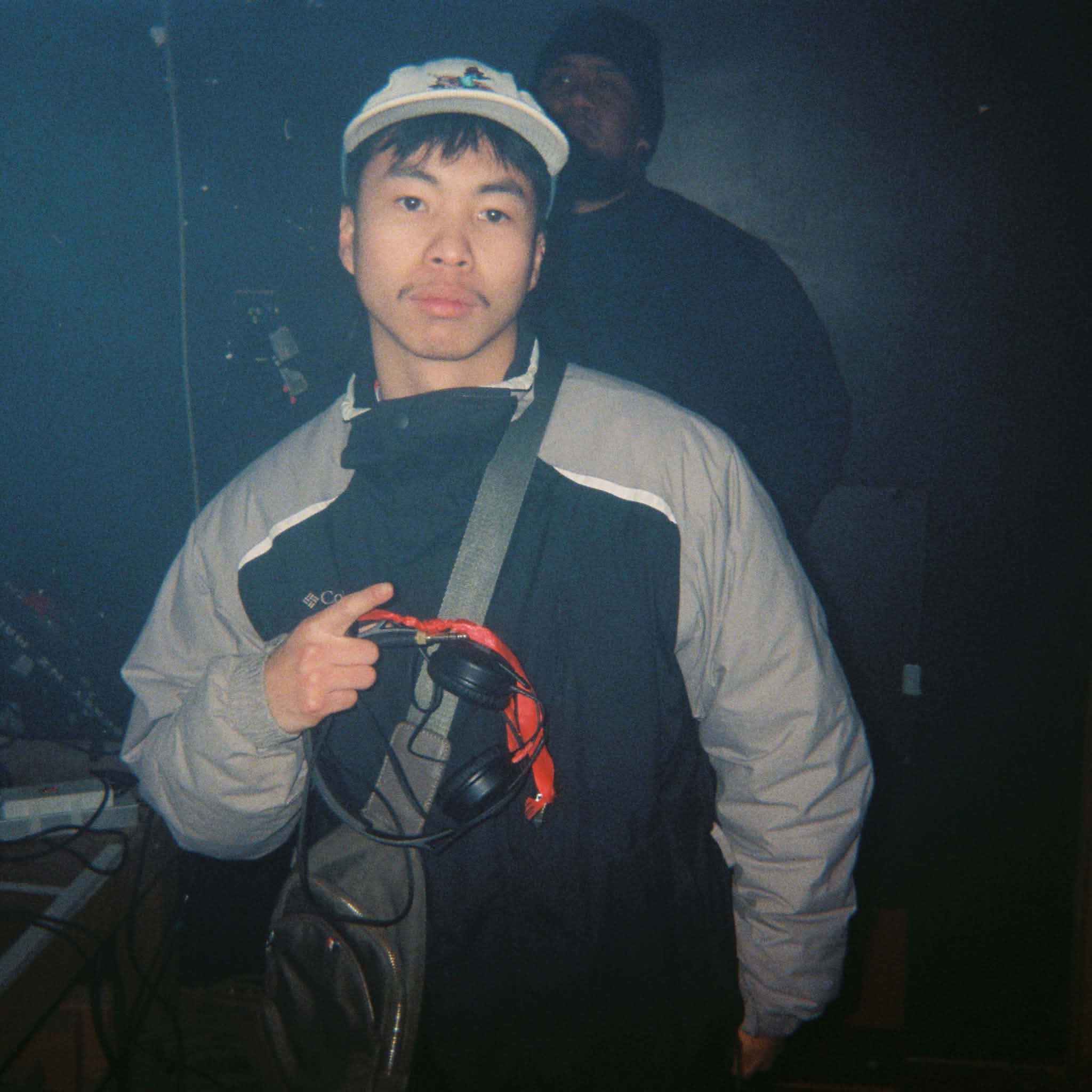
Eric, who records as VERSAH, is putting jump up out on labels that DJs are pulling from right now. The techniques in this course are the ones behind those records, so you're getting a working method rather than a generic curriculum with a genre label on it.
Releases on
Exert / Alpha Circuit / OneEighty Records / Let Them Cook Records / DeVice (soon)
Supported by
Don't take our word for it
★★★★★
"I left every session feeling more confident and less like I was just pushing buttons and hoping I was right. I genuinely felt like I was learning the secret sauce without having to go through tons of trial and error."
Storm Smith / Auckland NZ / Beginners Program
★★★★★
"This course genuinely feels like it saved me years of trial and error. I not only learned a huge amount but thoroughly enjoyed the experience and felt treated like a peer rather than a beginner."
Brent Robinson / Tauranga NZ / Beginners Program
★★★★★
"The team at NLP should be the first people any aspiring producer calls. After completing the course you'll have the skills and knowledge to jump into a DAW with confidence. This saved me months of trial and error."
Dion Watson / Perth Australia / Beginners Program
One cohort, ten spots
Small on purpose. Every week opens with live critique of student work, and that only works if there's time to get to everyone.
Jump Up Mastery, Cohort 01
NZD / one off payment
- 6 x 1.5-2 hour live online sessions with VERSAH & some of the NLP team
- Every session recorded, yours to keep
- Weekly homework with written mentor feedback
- Live critique of your work at the top of each session
- The VERSAH sound pack used in the composition week
- Private community access with your cohort
- Demo submission guidance in the final session
Cohort 01 starts Sunday 6 September, NZT
Payment plan
Want to split it? Two payments, no extra cost. Mention it when you apply and we'll send the link.
Miss a week?
Every session is recorded and posted the same day, and you'll still get written feedback on your homework.
Already in mentorship?
Starter, Pro and Elite members get a discount on cohort programmes. Get in touch before you apply and we'll sort the code.