Why do you use pink noise when mixing?
What's so good about pink noise?
To understand why we reach for pink noise when mixing, we first have to understand a quirk of human hearing: our ears don't treat all frequencies equally.
This got mapped out by Harvey Fletcher & Wilden Munson back in 1933. They played people tones at different frequencies & asked them to match each one in perceived loudness. The result was the Fletcher Munson Curve (later updated by ISO 226:2003, though the shape is very similar).
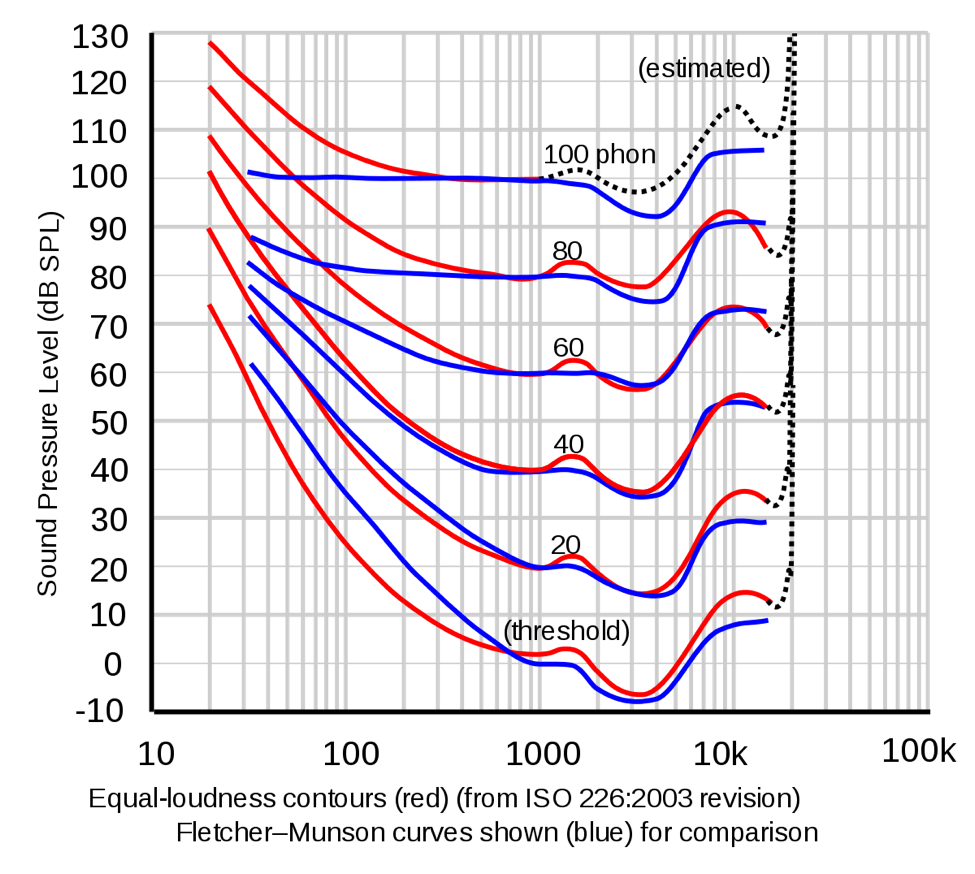
The lines show how loud each frequency actually had to be played to be heard as equally loud. The takeaway: we're most sensitive in the upper mids, around 3-4khz, & far less sensitive in the bass, which is why low frequencies have to be cranked way up to keep pace.
So that's our hearing. But the real reason we use pink noise & not white comes down to something separate: how energy is spread across the spectrum.
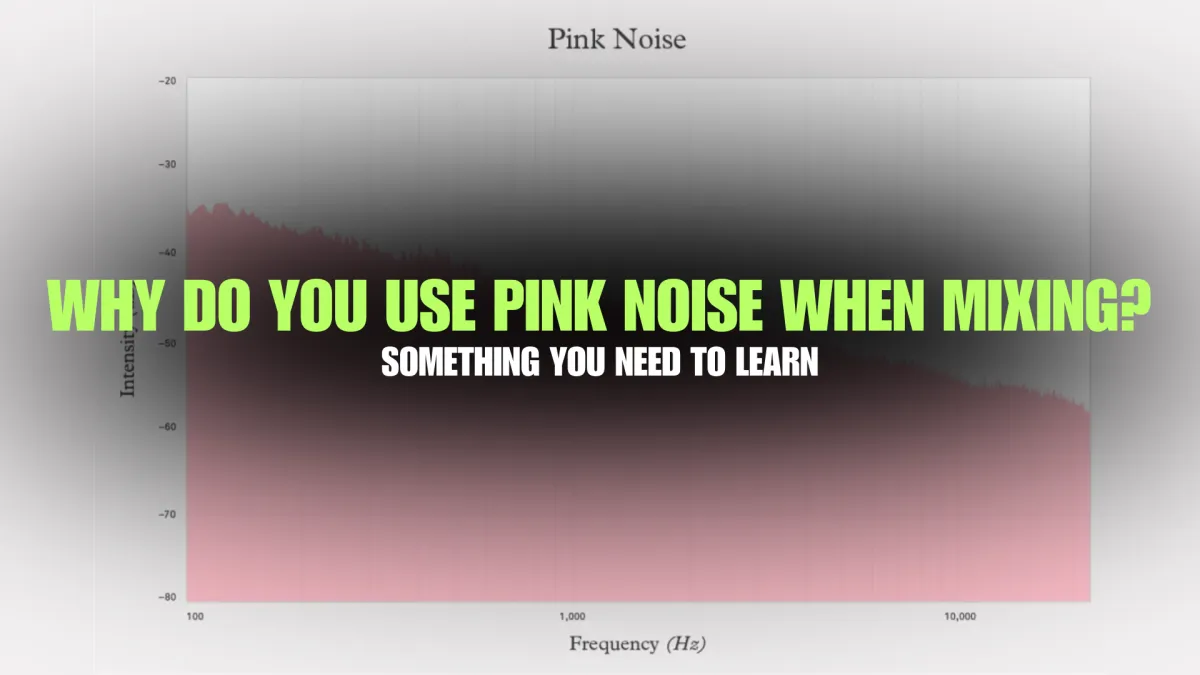
White noise delivers equal energy per Hz. Pink noise delivers equal energy per octave. That matters because we hear pitch in octaves, not in raw Hz, & the Hz span of an octave doubles as you climb. 200-400hz is one octave, but so is 2000-4000hz. A 10x jump in Hz, yet still only 1 octave.
So white noise crams far more energy into each higher octave, which is why it sounds harsh & top-heavy. Pink spreads that energy evenly across octaves, exactly the way our ears expect to hear it, so it sounds balanced. Better yet, most well-mixed music roughly follows that same pink tilt, which makes it a genuinely useful reference to mix against.
I hope this was helpful,
Max.